The harvest arm was sticking part way through its cycle and the bin never filled. He replaced the module, cleaned the mould thoroughly and set the arm so it clears the stack properly.
Anwen H.2025-11-05
Independent Sub-Zero specialists · Fleming Island, Clay County
Monday – Friday 8:00am – 6:00pm Call (904) 201-3304
Standalone ice machines and the ice maker inside a built-in freezer — no ice at all, a bin that never fills, cubes that come out hollow, or water where it should not be.
An ice maker that quit overnight and one that faded over a season fail in different places. Which of the two it was decides where we start.
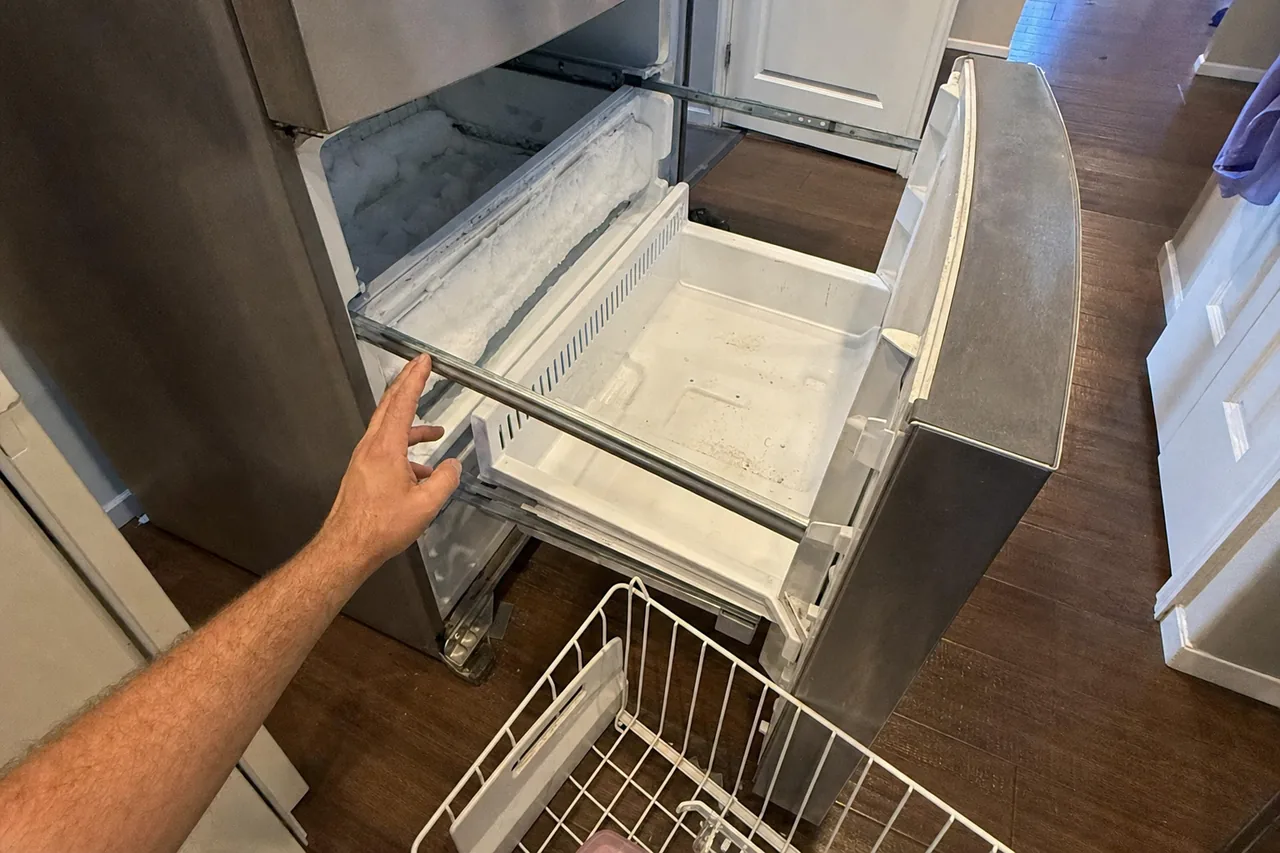
Two different appliances get called the ice maker. One is the module inside a built-in freezer or a freezer column, fed by a small supply line and dumping into a bin in the door or the drawer. The other is a standalone ice machine, usually undercounter, which makes clear ice on a plate or a mould, needs its own water supply and its own drain, and is a considerably more complicated machine. They fail for different reasons, so the first thing we establish is which one you have.
Before anything is opened we want to know which of those two it was, because the answer moves half the list.
A machine that produced normally on Friday and produced nothing on Monday failed at a component: something opens or it does not, turns or it does not, senses or it does not. A machine that has been getting worse across a season — cubes shrinking, then coming out irregular, then harvests starting to stick — is a wear or restriction story, and the parts worth bringing are different.
Most owners know the answer once the question is put that way: was there a last normal day, or has it been sliding?
Ice makers are the appliance most often defeated by where they were put rather than by anything inside them. A standalone undercounter machine needs its own water supply, a drain with a genuine fall to the trap or a working pump, air across the condenser at the grille, and enough electrical supply of its own. Take any one of those away and it will misbehave in a way that looks internal.
The same is true of the built-in module. It depends on the freezer compartment around it holding temperature and moving air properly, so a freezer that is running a few degrees warm shows up first as an ice problem rather than as a temperature complaint.
For a freezer ice maker, we work from the cheapest finding outwards: the shut-off arm or bin sensor first, because a unit that believes the bin is full is behaving correctly and needs no parts at all, then the water actually arriving, then the parts that cost money to be wrong about. In order, that means the shut-off arm or the bin sensor that tells the unit it is full, the inlet valve solenoid, the mould heater that releases the harvest, the harvest motor, and the supply line — which on a built-in is frequently crimped behind the unit after somebody rolled it out to clean and rolled it back a few inches too far.
For a standalone machine, add the drain. Gravity-drained units depend on the installer having given them a genuine fall to the trap, and a machine that has been fine for years can start backing up when a floor is redone or a line sags. Pump-equipped units add a pump that can fail on its own. Water on the floor in front of an undercounter ice machine is a drain question until proven otherwise.
A common and misread symptom: the machine is producing ice, but the bin holds one solid mass instead of loose cubes. That is almost never the ice maker failing. It is either the bin sitting in a compartment that is warmer than it should be, so cubes partly thaw and refreeze, or a small quantity of water reaching the bin outside the harvest cycle. Both are fixable and neither is a new ice maker.
Ice picks up whatever the air in the freezer holds, because it is porous and it sits there for weeks. If the ice tastes wrong and a new filter did not solve it, the next things to look at are how long the bin has been sitting unturned, the condition of the supply line, and the air management inside the compartment.
Flat diagnostic fee, credited toward the repair. Written estimate before any part is ordered. Genuine OEM parts, 90 days on labour and 365 days on parts. We service Sub-Zero refrigeration only, as an independent shop, and we work Fleming Island and Clay County first.
These are the bands this kind of fault lands in once it is diagnosed, parts and labour together. The visit comes off whichever line the job turns out to be.
| Work | Typical range |
|---|---|
| $80 diagnostic visit | $80 |
| Ice maker, water valve or supply line | $250–$620 |
| Defrost heater, thermostat or sensor | $260–$630 |
Ranges, not quotes: the firm figure is written down after the diagnosis and nothing is ordered or billed until you have approved it. On this page the work we describe runs from $80 for the visit to about $630 at the top of the band above. The whole book of bands is on the pricing page.
A flat $80 covers the visit and the diagnosis. It is credited toward the repair if you go ahead with the work.
Labour is warranted for 90 days and parts for 365 days from the date of the repair. Genuine OEM parts throughout.
We service Sub-Zero refrigeration only, as an independent shop. We do not service heating or air conditioning. No furnaces, no heat pumps, no air handlers, no mini-splits and no ductwork. That is a separate trade with its own licensing, and a call about a house that will not cool belongs with an HVAC contractor rather than with us.
4.3 out of 5 across 62 customer reviews. Read every one of them.
The harvest arm was sticking part way through its cycle and the bin never filled. He replaced the module, cleaned the mould thoroughly and set the arm so it clears the stack properly.
Anwen H.2025-11-05
Cubes were coming out cloudy and only half filled. He checked the water pressure at the valve before blaming the machine, found it barely opening, and put a new one in on the spot.
Cordelia T.2026-07-15
The bin was filling at half the speed it used to. He measured pressure at the valve, found it weak, and traced that to a supply line kinked behind the cabinet the last time it was pushed back in.
Beatrix H.2026-09-12