An older cabinet that two other shops had told us to scrap. He read the serial plate, sourced the correct evaporator for that run, and it has held its temperature through the whole summer since.
Desmond L.2026-04-11
Independent Sub-Zero specialists · Fleming Island, Clay County
Monday – Friday 8:00am – 6:00pm Call (904) 201-3304
An ice maker that quit overnight and one that faded over a season fail for different reasons. The order we check things in, and why that order saves a visit.
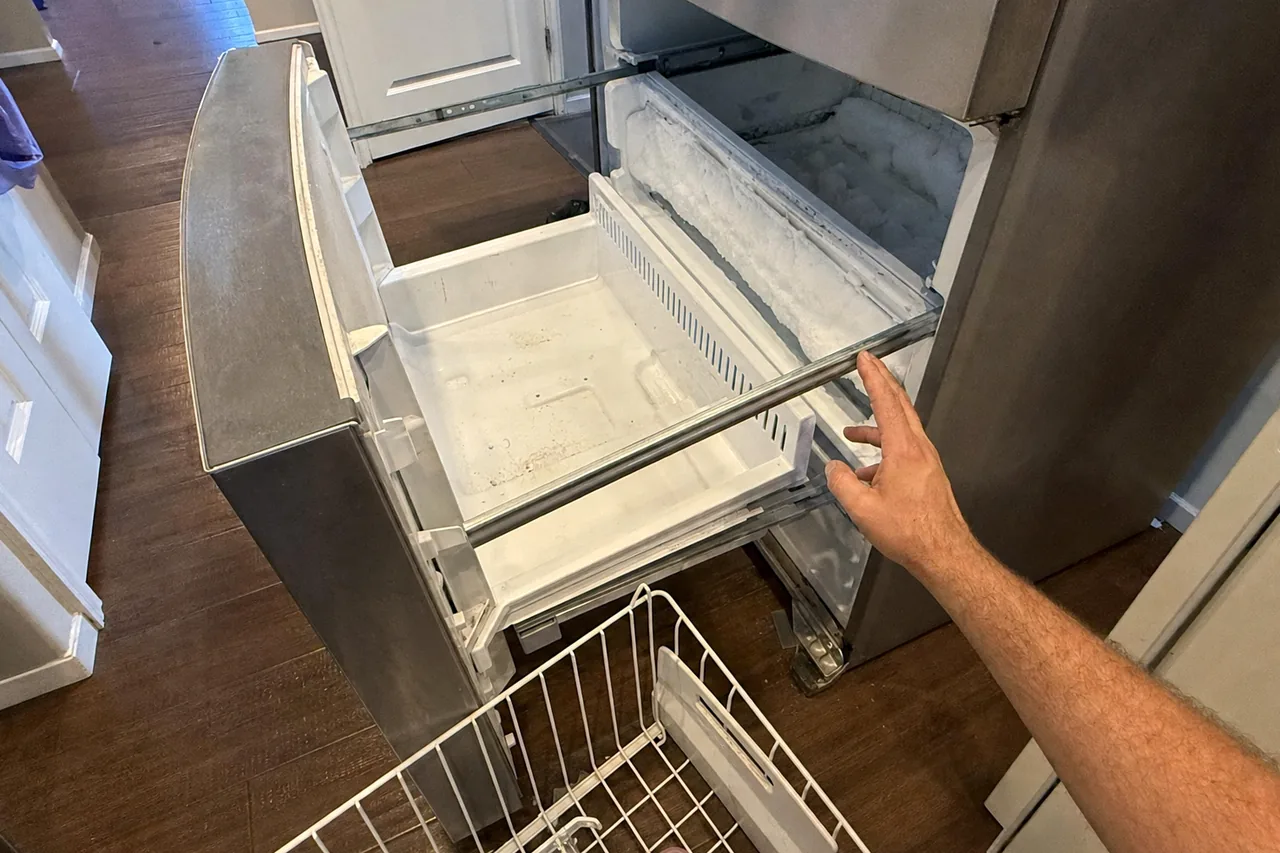
Two different appliances get called the ice maker, and the first thing we establish on the phone is which one is in the house. One is the module inside a built-in freezer or a freezer column: a small supply line, a fill valve, a mould, a harvest mechanism, and a bin in the door or the drawer. The other is a standalone undercounter ice machine, which has its own water supply, its own drain and a considerably more involved cycle. They fail in different places, so they get diagnosed in a different order.
Before anything is opened, we want to know whether the ice stopped suddenly or faded. That single answer moves half the list.
A machine that was producing normally on Friday and produced nothing on Monday failed at a component: something opens or it does not, turns or it does not, senses or it does not. A machine that has been getting worse for a season — cubes shrinking, then coming out irregular, then the harvest starting to stick — is a wear or restriction story, and the parts we bring are different.
Owners often apologise for not knowing. They usually do know, once asked in that form: was there a last normal day, or has it been sliding?
We start where a fault is cheapest to prove.
First the shut-off arm or the bin sensor, because a unit that believes the bin is full is behaving correctly and needs no parts at all. An arm resting against a stack of frozen-together cubes, or an optical sensor with frost across it, is one of the most common calls that ends without a repair.
Then the water actually arriving. A built-in gets rolled out to be cleaned and rolled back a few inches too far, and the supply line behind it is left kinked against the wall. That is a five-minute finding and it costs nothing to rule out, which is exactly why it goes early rather than late.
Then the inlet valve solenoid, which is a coil that either opens the valve or does not, and can be tested rather than guessed at.
Then the harvest side: the mould heater that releases the cubes and the motor that ejects them. A unit that fills, freezes and then holds onto the ice is telling you the problem is here rather than upstream.
Only then the control, and never on suspicion alone. Boards are the most expensive thing on the list and the easiest thing to blame, and we would rather prove the cheap components innocent first.
Everything above still applies, and then there is water leaving the cabinet as well as entering it. Gravity-drained machines depend entirely on the installer having left a genuine fall to the trap. A machine that ran for years can start backing up after a floor is redone or a line sags on its straps. Pump-equipped machines add a pump that can fail on its own terms.
Water on the floor in front of an undercounter ice machine is a drain question until proven otherwise, and it is worth saying that the leak often appears some distance from where it starts.
Cubes fusing into one block in the bin. The machine is producing normally. The bin is either sitting in a compartment running warmer than it should, so cubes partly thaw and refreeze into each other, or a small amount of water is reaching the bin outside the harvest cycle. Neither needs a new ice maker.
Ice that tastes wrong after a fresh filter. Ice is porous and it sits in an open bin for weeks, so it takes on whatever the air around it holds. Look at how long the bin has gone unturned, at the condition of the supply line, and at the air management inside the compartment before assuming the fault is in the water.
Whether the ice stopped suddenly or faded. Whether it is a freezer’s built-in module or a standalone machine with its own drain. Whether anything was moved, remodelled or re-plumbed near the appliance in the months before. Those three answers settle most of the approach before we arrive, and they are the difference between a visit that ends in a repair and one that starts by ruling out the wrong thing.
The bands below are the ones this note is about. They are completed repairs, parts and labour together, on top of a flat diagnostic visit that is credited toward the work.
| Work | Typical range |
|---|---|
| $80 diagnostic visit | $80 |
| Ice maker, water valve or supply line | $250–$620 |
| Evaporator or condenser fan motor | $250–$600 |
Ranges, not quotes: the firm figure is written down after the diagnosis and nothing is ordered or billed until you have approved it. On this page the work we describe runs from $80 for the visit to about $620 at the top of the band above. The whole book of bands is on the pricing page.
A flat $80 covers the visit and the diagnosis. It is credited toward the repair if you go ahead with the work.
4.3 out of 5 across 62 customer reviews. Read every one of them.
An older cabinet that two other shops had told us to scrap. He read the serial plate, sourced the correct evaporator for that run, and it has held its temperature through the whole summer since.
Desmond L.2026-04-11
Cabinet was pulling down far too slowly after every door opening. He measured both compartments against their setpoints first, then found the air damper jammed on a broken pivot and swapped the assembly.
Colton B.2025-12-09
Frost was creeping across the rear wall of the fresh food side and nothing else looked wrong. It was the defrost termination sensor reading high, which he showed me on the meter before replacing it.
Sabine K.2026-05-20