The undercounter unit in the island had been running without stopping and the surrounding cabinetry was warm. The front vent path was packed with dust and pet hair, and he cleared the whole route.
Casimir N.2026-05-14
Independent Sub-Zero specialists · Fleming Island, Clay County
Monday – Friday 8:00am – 6:00pm Call (904) 201-3304
We work Sub-Zero refrigeration and nothing else. Below is the full range, with the symptoms that most often bring us out to each one.
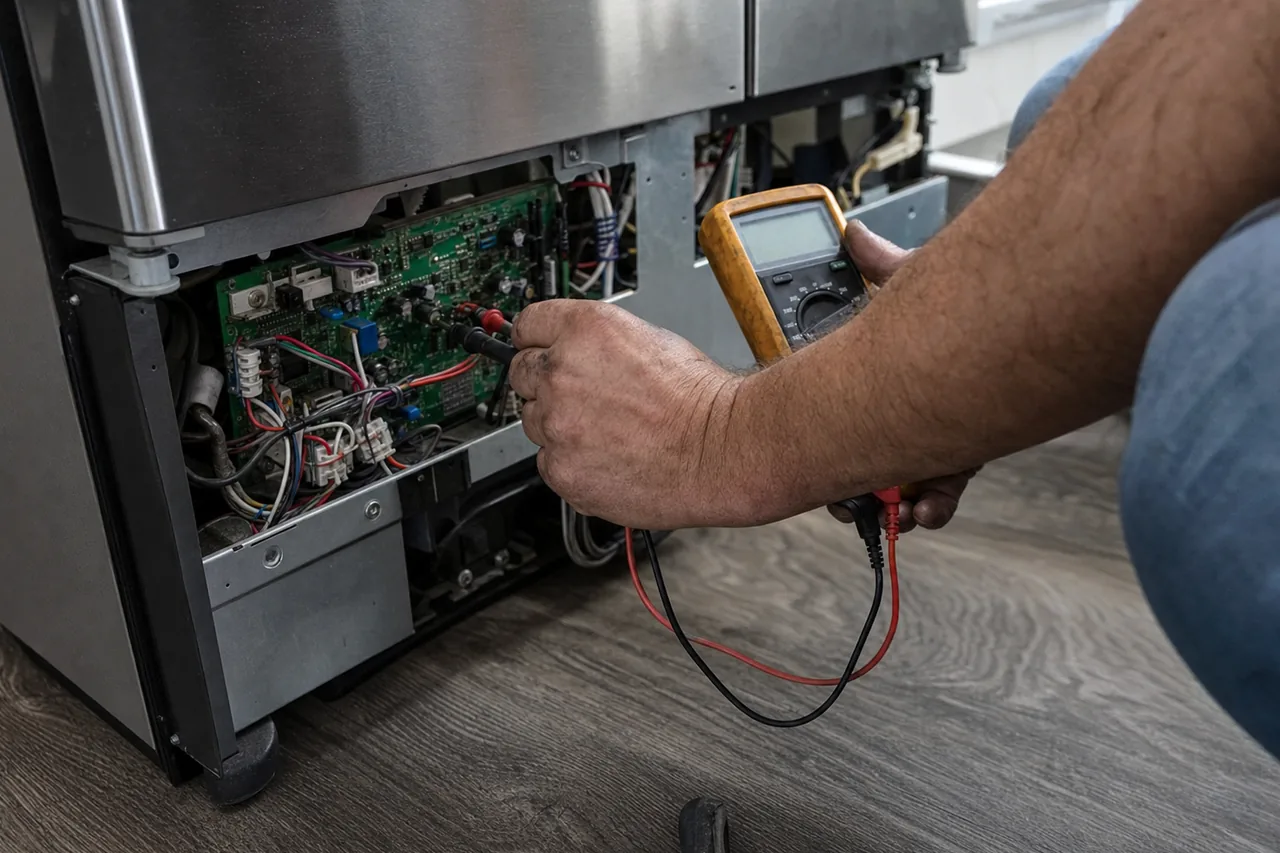
The full-height built-in units that sit flush with the cabinetry — warm boxes, running fans, frost, water on the floor, doors that stopped sealing.
Single-purpose refrigerator, freezer and wine columns that hide completely behind cabinet panels — one box warm, one still cold, and no visible grille to check.
Refrigerator drawers, beverage centres and undercounter freezers built into islands, butler's pantries and lanai kitchens — small boxes in tight, hot cabinets.
Wine units drift before they fail. Uneven zones, a glass door that sweats through August, a fan that runs and runs, and racks that no longer sit true.
Standalone ice machines and the ice maker inside a built-in freezer — no ice at all, a bin that never fills, cubes that come out hollow, or water where it should not be.
Refrigerant, compressors, condensers and evaporators — the part of the appliance that cannot be diagnosed from a symptom list and should never be guessed at.
The mechanical half of a refrigerator. Gaskets that have gone hard, hinges that have dropped, closers that stopped closing and custom panels that no longer sit flush.
Everything this shop does sits on the cold side of a kitchen: Sub-Zero built-in refrigerators, integrated refrigerator and freezer columns, undercounter drawers and beverage centres, wine storage, and ice makers. That is the entire list, and it is the entire business.
We do not service heating or air conditioning. No furnaces, no heat pumps, no air handlers, no mini-splits and no ductwork. That is a separate trade with its own licensing, and a call about a house that will not cool belongs with an HVAC contractor rather than with us.
The line is worth drawing because the two jobs meet at the wall. A condenser has to reject its heat into the room it stands in, so a kitchen that runs warm will shorten the life of the appliance in it — and we will tell you when that is what we are looking at. Fixing the room, though, belongs to another trade.
One book for all seven, because the part decides the figure rather than the cabinet it came out of. The service page for each prints the bands that actually apply to it.
| Work | Typical range |
|---|---|
| $80 diagnostic visit | $80 |
| Door gasket or seal replacement | $250–$650 |
| Evaporator or condenser fan motor | $250–$600 |
| Defrost heater, thermostat or sensor | $260–$630 |
| Ice maker, water valve or supply line | $250–$620 |
| Electronic control board | $420–$840 |
| Compressor or sealed-system repair | $870–$2,460 |
Ranges, not quotes: the firm figure is written down after the diagnosis and nothing is ordered or billed until you have approved it. On this page the work we describe runs from $80 for the visit to about $2,460 at the top of the band above. The whole book of bands is on the pricing page.
A flat $80 covers the visit and the diagnosis. It is credited toward the repair if you go ahead with the work.
You get a written estimate before any part is ordered or any labour is billed. Nothing proceeds without your approval.
Labour is warranted for 90 days and parts for 365 days from the date of the repair. Genuine OEM parts throughout.
4.3 out of 5 across 62 customer reviews. Read every one of them.
The undercounter unit in the island had been running without stopping and the surrounding cabinetry was warm. The front vent path was packed with dust and pet hair, and he cleared the whole route.
Casimir N.2026-05-14
The glass door fogged every humid afternoon and water was collecting on the lowest rack. The catch had gone out of adjustment so the door never drew fully in. He set it and fitted a new seal.
Sorrel J.2026-09-01
The unit was running non stop and never quite reaching its setting. He weighed in the charge properly after the repair instead of guessing on gauge pressure, which the last firm did not bother with.
Alaric M.2026-06-27