Upper shelves had crept above the setting while the bottom of the cabinet was fine. He cleaned a condenser thick with dust left by our flooring work, and the drift closed up again over the next day.
Ferdinand A.2026-09-16
Independent Sub-Zero specialists · Fleming Island, Clay County
Monday – Friday 8:00am – 6:00pm Call (904) 201-3304
A Sub-Zero wine cooler that hums, clicks and whooshes is usually fine; a squealing fan, a grinding rattle or a compressor that keeps restarting needs a look.
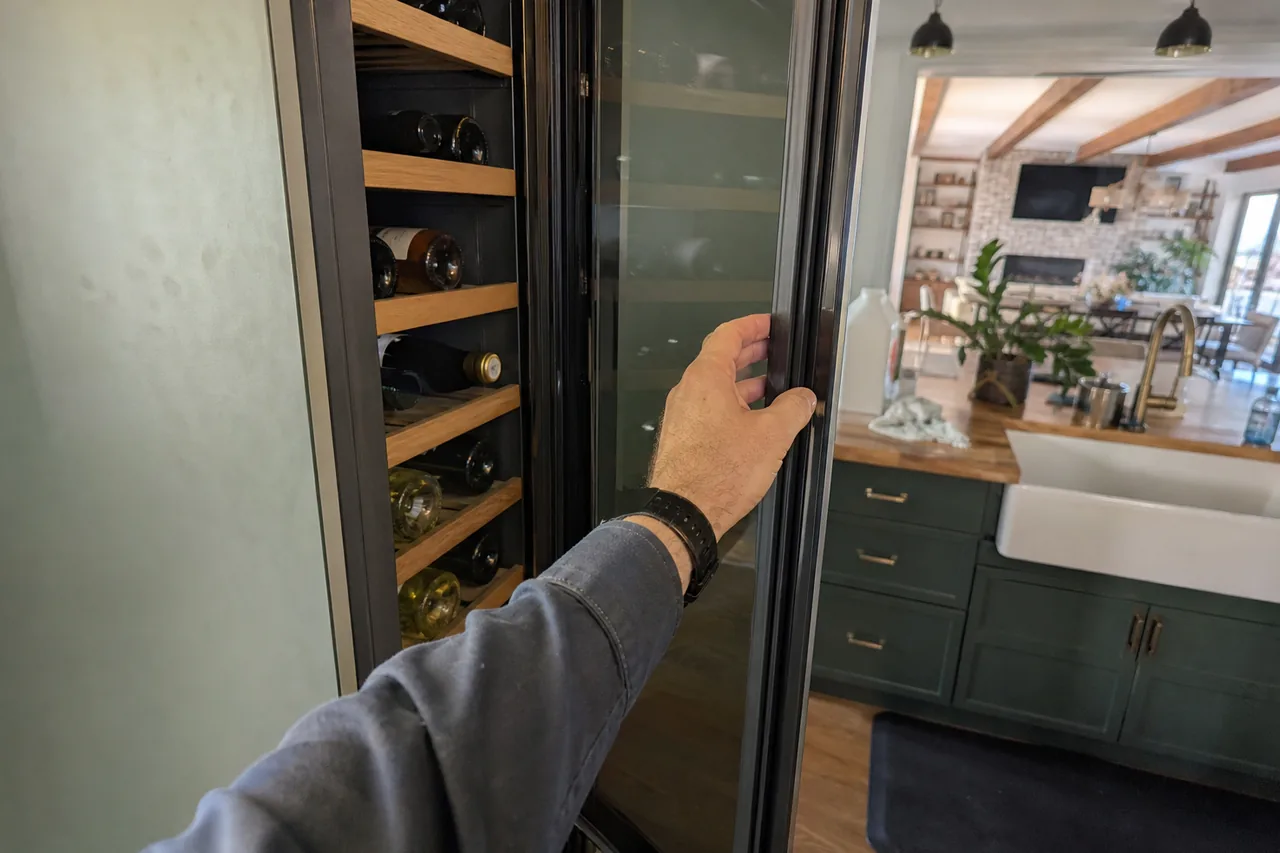
A Sub-Zero wine cooler is never completely silent, and most of what you hear is normal: a low hum from the compressor, a steady whoosh of moving air, a click as each cooling cycle starts or ends, and the odd tick as the racks and liner change temperature. The sounds worth acting on are a squeal or grind from a fan, a rattle that rises and falls with the compressor, and a unit that runs nonstop while the display temperature creeps upward. In a wine unit the usual causes are a dusty condenser, a worn fan motor or something brushing a fan blade, and only now and then the compressor itself.
Wine storage holds a narrow band of temperatures, so the cooling system switches on and off more often than many owners expect. Designer (IW), Classic (BW) and UW-24 models can be set anywhere from 39°F to 65°F, and a zone kept near the cold end will cycle more. These are the sounds of a unit doing its job:
Runs get longer and a little louder after you load a case of room-temperature bottles, after the door has stood open, or in the first days after installation. A brand-new Sub-Zero wine unit may pull only one zone down to temperature at a time, so for a while one side can sound busier than the other.
A fan motor with a failing bearing often starts with a faint chirp that comes and goes, then settles into a steady grinding. A ticking or scraping that keeps time with the fan usually means the blade is hitting frost, a loose wire or a stray bit of packing. A buzz that shakes a panel can be as simple as a loose grille, or a bottle resting against the rear wall and passing vibration into the cabinet.
A compressor that hums for a few seconds, clicks off, and tries again a few minutes later is having trouble starting. If that repeats while the wine warms, switch the unit off and arrange service. A hard knock each time the compressor starts or stops can mean a worn mount or an internal problem. Our compressor noise guide covers those sounds in full-size refrigerators.
Start with the condenser. Sub-Zero recommends cleaning it every six to twelve months, and more often in a home with pets, because matted lint makes the compressor and fan work harder and run louder. Use a soft brush or a vacuum attachment, keep the aluminum fins straight, and skip chemical sprays, which the maker calls unnecessary and does not recommend. If the unit has also been running warm and the condenser has gone three months or more without a cleaning, clean it and give the cabinet 24 hours to recover before you judge the result.
Is the unit level and solid on the floor? Is the grille seated? Is any bottle touching the back wall? Does the door close fully without bouncing off a rack? On a sticky Fleming Island summer afternoon, a door left slightly open keeps the compressor running long and loud.
Most Sub-Zero wine units have no water connection at all. Apart from the IW-30CI, Sub-Zero wine storage carries no internal water filter, and the IW-30CI is also the model whose display shows an ice cube icon when its ice maker is on. If you hear a water valve buzzing or cubes dropping, find out which appliance is actually making the sound. In matched kitchens a wine column often stands beside a refrigerator column or an undercounter ice maker, and noise travels easily through shared cabinetry.
Call when a fan keeps squealing after the condenser is clean, when the compressor short-cycles, or when the display temperature climbs while the unit runs. A visit starts with the $80 diagnostic. For a new fan motor, whether at the evaporator or the condenser, expect something like $250–$600; sealed-system or compressor repairs usually run $870–$2,460, with the firm figure set once the diagnosis is done.
Before the visit, note what the serial tag says. It lists the model number, serial number and manufacture date, which tells the technician which parts fit. For a sealed-system fault, the installation date matters too: Sub-Zero’s full five-year sealed system warranty covers parts and labor for a defective compressor, condenser, evaporator, drier and connecting tubing, counted from original installation under normal home use.
The bands below are the ones this note is about. They are completed repairs, parts and labour together, on top of a flat diagnostic visit that is credited toward the work.
| Work | Typical range |
|---|---|
| $80 diagnostic visit | $80 |
| Door gasket or seal replacement | $250–$650 |
| Evaporator or condenser fan motor | $250–$600 |
| Defrost heater, thermostat or sensor | $260–$630 |
| Ice maker, water valve or supply line | $250–$620 |
Ranges, not quotes: the firm figure is written down after the diagnosis and nothing is ordered or billed until you have approved it. On this page the work we describe runs from $80 for the visit to about $650 at the top of the band above. The whole book of bands is on the pricing page.
A flat $80 covers the visit and the diagnosis. It is credited toward the repair if you go ahead with the work.
4.3 out of 5 across 62 customer reviews. Read every one of them.
Upper shelves had crept above the setting while the bottom of the cabinet was fine. He cleaned a condenser thick with dust left by our flooring work, and the drift closed up again over the next day.
Ferdinand A.2026-09-16
The glass door fogged every humid afternoon and water was collecting on the lowest rack. The catch had gone out of adjustment so the door never drew fully in. He set it and fitted a new seal.
Sorrel J.2026-09-01
The lower zone would not hold while the upper one was perfect. He found the second fan had failed, so that zone was living on whatever air drifted down, and both read true after the part arrived.
Leander M.2026-04-30